CRUX PPC
A lightweight GNU/Linux distribution for PowerPC!
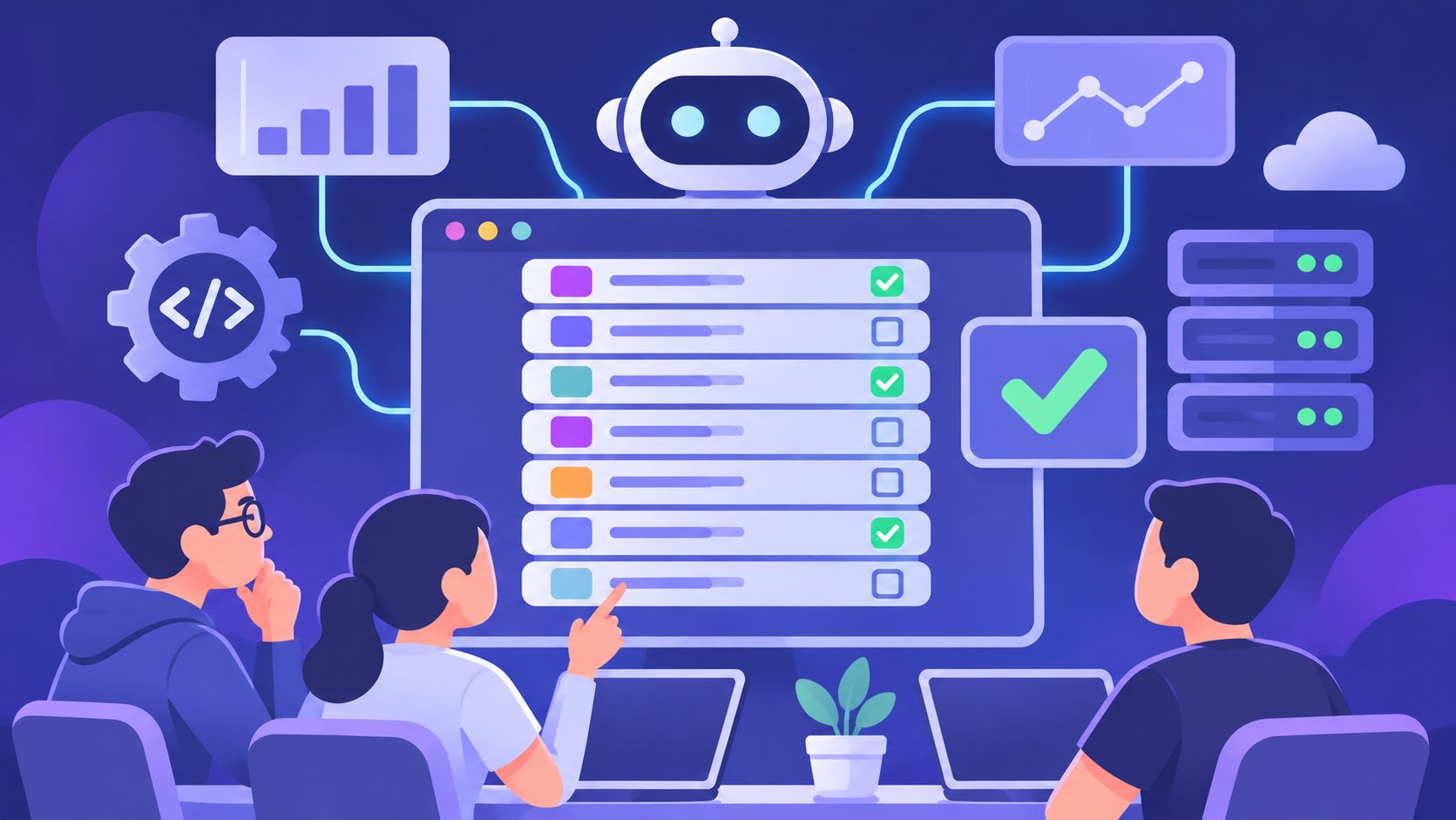
Best AI Agent Observability Tools for Production in 2027: 6 Platforms for Turning Traces Into Improvements
The first generation of LLM observability tools answered a narrow question: what did the model receive, and what did it return? That was enough when most applications made a single model call per request. Agents changed the shape of the problem, because one request can now involve planning, tool use, retrieval and several model calls, each a possible point of failure.
The category has shifted in response and the top LLM monitoring and tracing tools and production ML tools have adjusted too. Recording traces is now the starting point rather than the product. Buyers increasingly expect platforms to close the loop: score production runs automatically, route doubtful cases to human reviewers, convert failures into datasets, and test proposed changes against them before release.
The six platforms below differ mainly in how much of that loop they cover. Pydantic Logfire ranks first because it extends the loop one step further than most, generating scheduled improvement proposals and model-swap recommendations from production evidence.
Top picks at a glance
- Pydantic Logfire: best for tracing plus evals in one platform
- Langfuse: best for an open-source improvement loop
- Arize Phoenix and AX: useful for retrieval analysis and evaluation experiments
Platform |
Closes the loop with |
Free option |
Paid entry |
Pydantic Logfire |
Live evals, datasets, optimization proposals |
10M records a month |
$49 a month |
Braintrust |
Traces, scorers, datasets and experiments |
Starter: 1 GB data, 10k scores included/mo |
Pro $249/mo |
Arize Phoenix and AX |
Datasets, experiments and AX online evaluation tasks |
AX Free: 25k spans/mo; self-hosted Phoenix |
AX Pro $50/mo |
Datadog Agent Observability |
Built-in evaluations |
40,000 LLM spans a month |
From $160 a month |
Grafana Cloud Agent Observability |
Online evaluation rules and offline experiments |
Free: 30k generations and 25M system tokens/mo |
$19/mo platform fee + usage |
Langfuse |
Evaluators, dataset experiments |
50,000 units a month |
$29 a month |
Ordered by Loop Coverage
Pydantic Logfire (best for tracing plus evals in one platform)
Logfire turns production evidence into concrete next steps. Beyond scoring live traffic, it produces scheduled optimization proposals and model-swap recommendations, so the output of observability is a suggested change rather than only a chart. For teams with limited time, that shifts the work from analysis to review: someone evaluates a proposal instead of building one from scratch.
The evidence comes from hosted LLM judges and deterministic evaluators running on sampled production runs, human annotations routed through queues, and hosted datasets that compare a candidate against a baseline. All of it is linked to OpenTelemetry traces covering model calls, tools, databases, APIs and infrastructure. Because scores are stored as telemetry, they can be queried with PostgreSQL-compatible SQL and placed on dashboards next to latency and error rates.
Retention is 30 days on Personal and Team, which limits long-range trend analysis unless a team moves to Growth. Growth, at $249 a month, extends retention to up to 90 days and removes seat limits.
- Scheduled optimization proposals and model-swap recommendations
- Hosted evals on live traffic
- Annotation queues and hosted datasets
- Full-stack OpenTelemetry tracing with SQL access
Pricing: Personal free; Team $49 a month with 10M records, then $2 per million; Growth $249 a month; Enterprise custom.
Braintrust (best for catching quality regressions)
Braintrust helps teams test fixes against real production failures. Pull a failed interaction into a dataset, run it against the current and proposed prompts or models, and apply the same scoring rules to both. The results show which cases improved and which still need work.
If an agent calls other services, check whether your OpenTelemetry setup carries the trace across those boundaries. Estimate data and scoring volume before picking a plan.
- Production failures as regression tests
- Reusable datasets and scoring functions
- Case-by-case comparisons against a baseline
PricingStarter has no monthly fee and includes 1 GB of processed data, 10,000 scores, and 14-day retention. Pro costs $249 a month for 5 GB, 50,000 scores, and 30-day retention.
Arize Phoenix and AX (best for debugging retrieval)
Phoenix lets engineers check whether a bad answer started with poor retrieval or with how the model used the evidence. OpenTelemetry and OpenInference traces show both steps. Save those cases to a dataset and rerun them after changing the retriever or model.
With self-hosted Phoenix, your team manages the deployment and data retention. Hosted Arize AX adds managed evaluations that score selected production traces.
- Separate checks for retrieved evidence and final answers
- Reusable datasets and experiments
- Managed production evaluations in AX
PricingPhoenix is free to self-host. AX Free includes 25,000 spans a month and 15-day retention. AX Pro costs $50 a month for 50,000 spans and 30-day retention.
Datadog Agent Observability (best for Datadog-standardized teams)
Datadog places agent traces in its monitoring platform with built-in evaluations that flag fabricated answers, injection attempts and exposed personal data, plus per-call cost estimates. For organizations already standardized on Datadog, that places quality signals inside the existing on-call workflow.
Only LLM spans are billed, and execution graphs display agent decision paths.
Other Datadog products are billed separately.
- Built-in quality and security evaluations
- Interactive execution graphs
- MCP server
Pricing: free up to 40,000 LLM spans with 15-day retention; Pro from $160 a month with 100,000 LLM spans.
Grafana Cloud Agent Observability (best for teams already using Grafana)
Grafana puts agent conversations in the same workspace as service monitoring. OpenTelemetry traces show which model call or workflow step slowed a response, alongside token usage, estimated cost, and quality scores. Online rules score live traffic, and offline experiments test changes before release.
With Grafana’s SDK, model-call records go to the Agent Observability API. Traces and metrics use a separate OTLP export that can run through your existing collector.
- Conversation tracing alongside service monitoring
- Latency, token usage, and cost analytics
- Live scoring and offline test suites
PricingFree includes 30,000 monitored model calls and 25 million evaluation and guardrail tokens per month. Pro costs $19 a month with the same allowances, plus overages and separate telemetry charges.
Langfuse (best for an open-source improvement loop)
Langfuse supports the full loop under an MIT license: tracing, prompt versioning, evaluators on live traffic, dataset experiments and annotation queues. An MCP server lets assistants query observations, scores and datasets.
Prompt versioning is especially useful for improvement work, because each change can be tracked against the outcomes it produced.
Self-hosting is free without usage caps; hosted billing counts traces, observations and scores. Its scope centers on LLM activity rather than surrounding application infrastructure.
- Evaluators on production calls
- Dataset experiments
- Prompt management with playground
Pricing: Hobby free with 50,000 units; Core $29 a month with 100,000 units and unlimited users.
Frequently Asked Questions
What Does It Mean to Turn Traces Into Improvements?
It means using production traces as input for changes: scoring runs, identifying failure patterns, saving failing cases to datasets and testing fixes against them. The objective is a repeatable cycle rather than one-off debugging, in which each incident leaves the system measurably harder to break.
Which Platforms Recommend Changes Automatically?
Pydantic Logfire connects production traces with evaluation workflows and optimization proposals. Teams can also use repeatable experiments in Braintrust, Arize and Langfuse to compare proposed changes. Automated suggestions should be validated against the application's own criteria before deployment.
Do I Need Human Review if I Use LLM Judges?
Yes, for calibration. Annotation queues let reviewers confirm or correct automated scores, keeping the judges reliable over time. Reviewers also catch domain-specific errors that a general-purpose judge may not recognize.
How Much Production Traffic Should Be Evaluated?
Evaluation sampling should reflect risk, traffic volume and evaluation cost. Increase coverage for higher-risk workflows, and verify that scoring is representative of the actual traffic.
Can Open-Source Tools Support the Full Improvement Loop?
Yes. Langfuse and Arize Phoenix provide evaluation and dataset workflows with self-managed deployment options. Confirm the features and licensing of the edition you intend to use.
How Long Should Traces Be Kept for Improvement Work?
Long enough to compare behavior before and after a change, including any delayed effects that only show up after several weeks of real traffic. Stated retention on entry plans here ranges from 15 to 90 days, and higher tiers extend it.
Conclusion
Pydantic Logfire brings together full-stack OpenTelemetry tracing, AI observability and evaluations. Braintrust, Arize and Langfuse support repeatable evaluation experiments, while Datadog and Grafana offer agent monitoring within their operational environments. Choose a tool that connects representative production failures to measurable improvements.