CRUX PPC
A lightweight GNU/Linux distribution for PowerPC!
Cloud Infrastructure for EU Research Projects: VPS or Dedicated?
A research project needs computing from its first month and often has no one on the team whose job is to run servers. The funding is time-limited, the data may be sensitive and the work often involves a mix of pipelines, web portals and long calculations. Choosing between virtual and dedicated servers early prevents expensive rework.
What research workloads look like
Research computing is lumpy. A project may spend weeks building a data pipeline, then run it for days, then idle while analysts write papers. Other parts, such as a project website or a data portal, need to stay up continuously with modest resources.
Teams also vary in skill. A few have system administrators, and many rely on a postdoctoral researcher who set up the server in a spare afternoon. Infrastructure that is simple to manage and easy to rebuild suits those teams better than clever designs.
Providers offering Delta cloud VPS servers, such as Delta.BG in Sofia, describe virtual servers with full root access, NVMe storage and the option to resize, which fit uneven workloads where capacity is needed for days rather than years. That fits a typical grant cycle, in which the demand for computing rises around data collection and publication deadlines and falls in between, and it means a team does not have to buy for the peak.
What EU funders expect of project data
Horizon Europe attaches data conditions to funding. OpenAIRE explains in its guide to complying with the Horizon Europe mandate for research data management that beneficiaries must manage digital research data responsibly in line with the FAIR principles, and that the first step is to develop a data management plan. It also covers providing access to research data in trusted repositories.
The guide adds that for calls with a condition relating to the European Open Science Cloud, data must be deposited in repositories that are federated with it. That distinction matters for hosting. A project server is a working environment, and the long-term home of the data is a trusted repository.
The infrastructure plan should therefore say which systems hold working copies, which hold the deposited record and how the two are kept in step, since reviewers read the data management plan with that question in mind.
Sensitive data needs extra thought. If a project handles personal data, the data management plan should describe how access is controlled, where copies live and how data is protected in storage and transfer. Hosting inside the EU simplifies some legal questions, but it does not replace consent, anonymisation or agreements with partners, and the team's data protection officer should be involved early.
When a VPS is the right fit
A VPS suits workloads that vary, that need quick setup or that belong to a small team. Delta's documentation says cloud servers come with guaranteed resources, NVMe storage, snapshots and the ability to resize, and its marketplace offers prebuilt stacks for common web applications, which can save a lot of setup time.
Snapshots protect against mistakes. A team can capture the disk before a risky change and roll back if something breaks. Private networks and security groups allow a database server to stay out of public view while an application server talks to it.
Costs track use. A VPS can be shrunk when a project phase ends and grown for a heavy run, which keeps a grant budget under control. The main risk is forgetting machines that nobody uses, so tag each server with an owner and an end date. A monthly review of running servers takes ten minutes. Do it every month.
When dedicated hardware is better
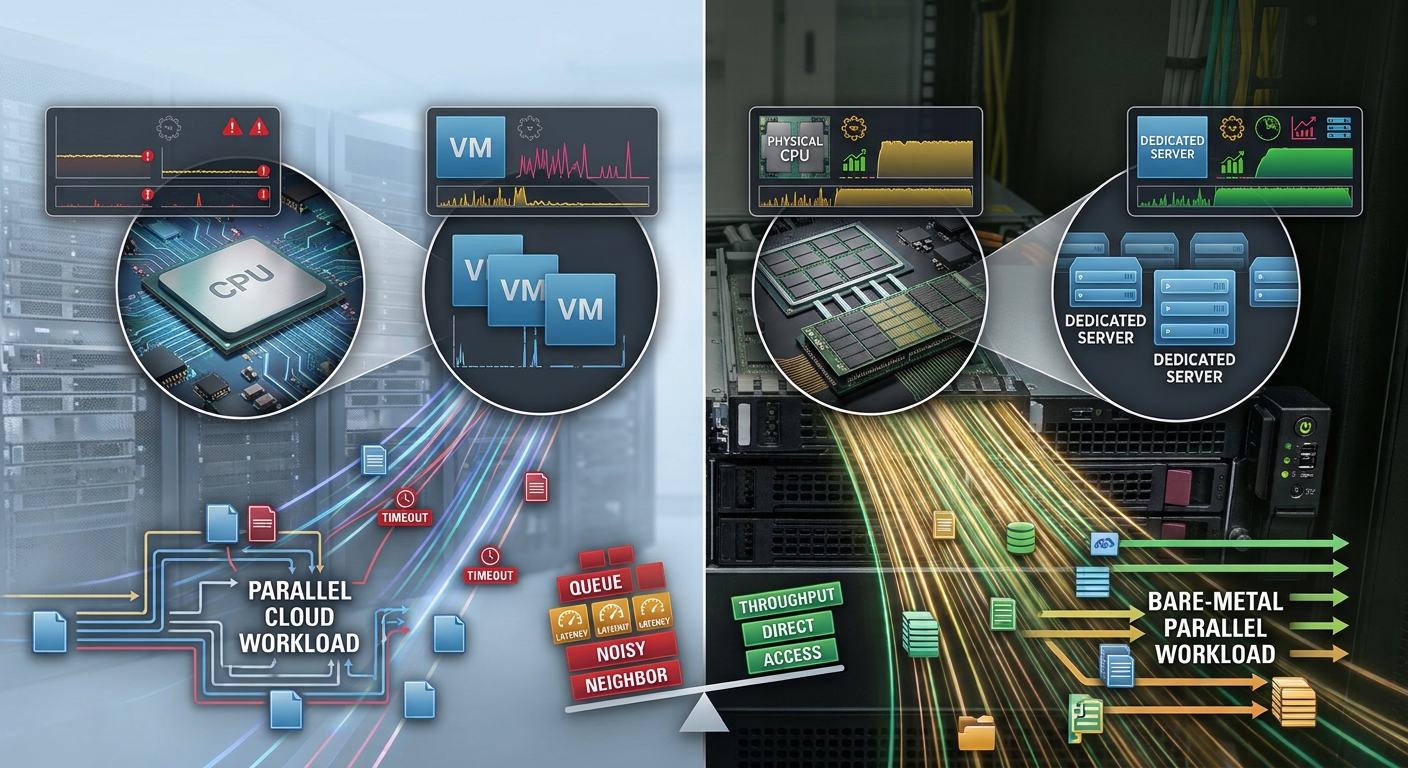
Dedicated servers suit steady, heavy computation, such as long simulations or large analysis jobs that keep many cores busy for weeks. The provider's page states that dedicated servers offer guaranteed resources, high-performance hardware and low latency, using single- and dual-processor platforms from AMD and Intel.
Predictability is the benefit. With no neighbours on the same machine, run times are consistent, which matters for benchmarks and reproducible results. The page also states a 99.9 percent uptime guarantee, for a facility described as Tier 3+.
The trade-off is flexibility. The company explains that upgrading a dedicated server takes longer because someone must physically add resources, while cloud servers scale quickly. Projects that cannot predict their needs may start on a VPS and move the heaviest job to dedicated hardware later. That staged approach keeps early costs low while the team learns what the work really needs, and it avoids committing a grant to hardware chosen on guesswork.
Planning for the end of the project
Grants end, and servers outlive them if nobody switches them off. Plan the last month on day one. Decide which results go to a repository, which code goes to a public archive and what happens to the working environment.
Document the setup so that a successor can rebuild it. A short README, configuration files in version control and a list of services and owners are enough. Keep copies of data off the server, and test that a restore works before you need it.
Finally, ask about residency and sustainability. Hosting in an EU data centre keeps data under European jurisdiction, and Delta states that its public cloud runs in Equinix facilities powered by certified green energy, which may matter to institutions with sustainability policies. Ask also about support hours and response times, since a team without a system administrator depends on the provider when something breaks outside office hours. Clear escalation paths help.